
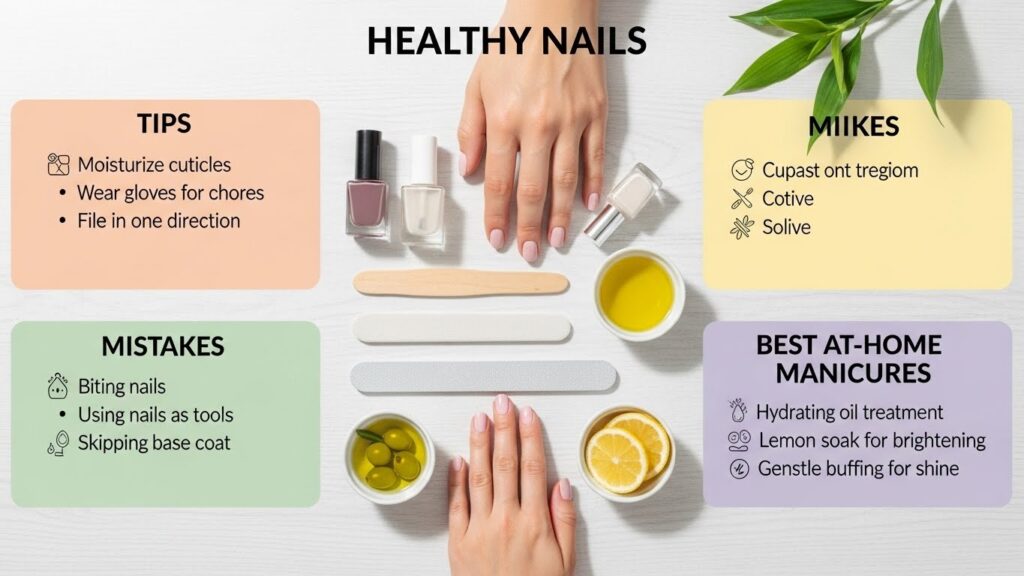
Your nails say a lot about your health and grooming habits. Weak, brittle, discolored, or peeling nails often indicate neglect or underlying issues. Nail care is not just about aesthetics—it’s about hygiene and health.
This detailed guide covers everything you need to know about healthy nails, common mistakes to avoid, and how to achieve salon-worthy nails at home.
Understanding Nail Health
Nails are made of keratin, similar to hair. Once damaged, they take time to recover.
Common Nail Problems
-
Brittle nails
-
Yellowing
-
Peeling
-
Slow growth
-
Hangnails
Daily Nail Care Habits
Keep Nails Clean and Dry
Excess moisture weakens nails.
Moisturize Nails and Cuticles
Use cuticle oil or hand cream daily.
Proper Nail Trimming
-
Trim straight across
-
File gently in one direction
-
Avoid sawing motions
Avoid These Nail Care Mistakes
-
Cutting cuticles aggressively
-
Using nails as tools
-
Excessive gel or acrylic use
-
Skipping base coat
Best At-Home Manicure Routine
Step 1: Remove Old Polish Gently
Start by removing any existing nail polish completely. Use an acetone-free nail polish remover whenever possible, as it is less drying and helps maintain nail strength. Soak a cotton pad, press it on the nail for a few seconds to loosen the polish, then wipe gently instead of scrubbing harshly.
Step 2: Shape Nails
Trim your nails if needed, then file them into a shape that fits your lifestyle and nail strength. Common shapes include round (strongest and low-maintenance), square (clean look), oval, or squoval. Always file in one direction rather than sawing back and forth to prevent splitting and peeling.
Step 3: Soak and Care for Cuticles
Soak your hands in warm water for 3–5 minutes to soften the cuticles. Apply cuticle remover or oil, then gently push the cuticles back using a wooden stick or cuticle pusher. Avoid cutting cuticles deeply, as they protect nails from infection—trim only loose or dead skin if necessary.
Step 4: Buff Lightly
Use a fine-grit buffer to smooth ridges and add a natural shine to the nail surface. Buff lightly and evenly—over-buffing can thin the nails, making them weak and prone to breakage. Once or twice a month is enough.
Step 5: Apply Base Coat
Apply a thin layer of base coat to clean, dry nails. This step helps prevent staining, smooths the nail surface, and allows polish to adhere better, increasing wear time. Let it dry completely before applying color.
Step 6: Polish and Top Coat
Apply nail polish in thin, even layers, starting from the center and moving outward. Two thin coats look better and last longer than one thick coat. Finish with a top coat to seal the color, add shine, and protect against chipping. Reapply top coat every 2–3 days to extend your manicure.
Nutrition for Healthy Nails
-
Biotin
-
Protein
-
Iron
-
Zinc
Final Thoughts
Healthy nails require patience, consistency, and gentle care. With the right habits and routine, beautiful nails are easily achievable at home.